The LADY SINGS THE BLUES Soundtrack: DIANA ROSS’ FIRST SOLO NO.1 HIT ALBUM

US Release: 12/1972 (Motown M758)
UK Release: 3/1973
(Tamla Motown TMSP1131)

Chart Positions: US Billboard Pop #1 US Billboard R&B #2 Canada #5 Australia #43 UK #50

Singles Released from Lady Sings The Blues – Original Motion Picture Soundtrack


US Release Date: 12/1972 (Motown M1211)

UK Release Date: 3/1973 (Tamla Motown TMG849)

Chart Positions: US Billboard Adult Contemporary #8 US Billboard R&B #20 US Billboard Pop #34 Canada #44

“When the announcement was made that I would be playing Billie Holiday, my mere acceptance of the role sparked a great deal of criticism….We hadn’t even started shooting and the press had already turned against me.”  Diana Ross – Secrets of a Sparrow

Having shown her impressive and versatile talents in her first solo television special, Diana!, including a natural flair for comedy and mime, Diana landed a far meatier role in the feature film Lady Sings The Blues, portraying the legendary jazz/blues singer Billie Holiday. A total contrast to anything she had tackled before, many critics had reservations about her taking the role before the movie had even hit cinemas. Being her first movie, Diana eagerly set about silencing the critics. The results were truly stunning. She far exceeded all expectations, excelling in the role and earning wide critical acclaim for her powerful performance, which was both harrowing and compelling. Showered with awards, including a Golden Globe win, she also deservedly received an Academy Award nomination for Best Actress plus a BAFTA (British Academy Award).

Prior to the release of the film, Motown issued a double-album soundtrack, which served as an effective trailer. The quintessential and divine soundtrack captures some of Diana’s most challenging vocal performances. Critics and die-hard Billie Holiday fans had some qualms about her singing Billie’s songs, as vocally and physically the two artists bore little resemblance. True, there were many differences between Diana’s angelic yet soulful and often anguish-filled vocal style and the starker, husky, blues-tinged voice of Billie Holiday. So, it’s to Diana’s credit that she never once tries to emulate Billie’s sound, or, as some sneering critics predicted, deliver a Supremes-like performance. What she did do was embody the spirit, timbre and nuances in Billie’s vocal style, shrewdly encapsulated with elements of her own sound.

Diana Ross recalled in her autobiography Secrets of a Sparrow: “During my nine months of research, I made some important decisions…one of them being that I would not try to sound like Billie….I would work to bring through my own sound.  Strangely, since I listened to almost nothing else during that time, I took on the same phrasing she used, and in this way, I ended up sounding a lot like her after all.”

Diana digs deeply away at the material, relying on her acting skills to interpret the lyrics astutely, as though she had lived through all the pain and suffering that marred Billie’s short and tragic life. She captures the moods of the songs perfectly, and they emerge as unique and distinctly Diana Ross without losing the depth, spirit and often dark moods of the original recordings.

For example, she commendably captures the flavour and feel of the breathtaking Good Morning Heartache. The deep wells of emotion, loneliness and acute vulnerability expressed by Billie on her recording is given a noble and definitive working-over. Recorded by Billie in 1957 for her Solitude album and written by Irene Higginbotham, Erkin Drake and Dan Fisher, the song was later recorded and released by Motown artist Billy Eckstine.
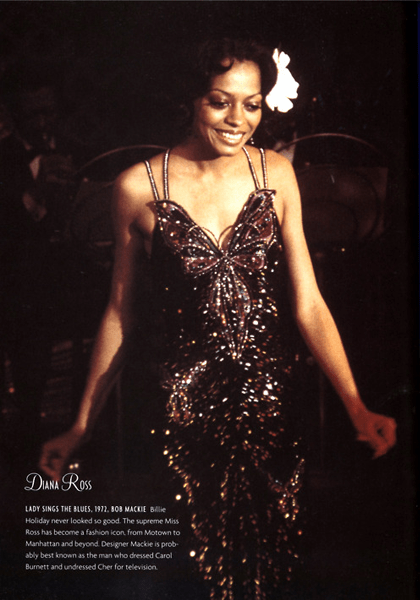
When the song was chosen to be Diana’s next single, a lot was riding on it, as she hadn’t had a major hit since 1971’s Remember Me. Sadly, it failed to make the grade and stalled at a disappointing #34, probably as the pop radio stations didn’t give it much airplay. On the other hand, R&B stations were much more forthcoming, and it glided into the R&B chart at #20 and landed in the Top 10 Adult Contemporary. A masterpiece in itself for sure, despite its lack of mainstream chart success.

A second single was initially scheduled, but owing to the lack of support for Good Morning Heartache, these plans were swiftly dropped. It was set to have been the exhilarating Don’t Explain, carrying a spellbinding performance by Diana. The song was penned by Billie and Arthur Herzog Jr, the idea forming after Billie’s husband, Jimmy Monroe, came home one night with lipstick smeared over his collar. Diana’s interpretation is haunting, heavenly even, and sends cold shivers down your spine, especially when seeing her sing the song live in concert. Though never commercially released, Don’t Explain was subsequently issued on promotional 45s.

The stark effect of Strange Fruit, a song used in the film in which Billie describes how she saw a black man hanged from a tree following a vicious racist attack from the Ku Klux Clan, is delivered by Diana in an icy but magnificently compelling performance. Hauntingly atmospheric in tone, she stretches herself vocally, becoming totally immersed as her voice drips with a genuine and raw emotion.

Another major highlight is the stirring, gutsy God Bless The Child, which first appeared as the B-side to Good Morning Heartache. Diana once again loses that occasionally angelic sound to deliver a strikingly husky, lower-register performance that’s just mesmerising. In Billie’s autobiography, she recalled an argument with her mother over money, and during this heated exchange, her mom said, “God bless the child, that’s got his own.” Feeling enraged, this led to Billie turning the line into a starting point for the song. Billie’s original version was later honoured with the Grammy Hall of Fame Award in 1976.

Strange Fruit was written in the late 1930s by teacher Abel Meerepol, originally as a poem, about the lynching of African-Americans. Lynchings occurred in the south primarily, but there were several others in various regions. The writer, Abel, set Strange Fruit to music and, along with his wife and singer Laura Duncan, performed it as a protest song against racism in many venues across New York, including Madison Square Garden. Years later in 1978, Billie Holiday’s definitive reading of the song was inducted into the Grammy Hall of Fame, as well as later being listed in the Songs of the Century, by the Recording Industry of America and the National Endowment for the Arts.

My Man (Mon Homme) is just triumphant. The beauty and essence of soul in Diana’s own sound pours out on this exalting number. Her diction, phrasing and enunciation are so precise, and the more complex inclines of the song are mastered to perfection. A deep, aching sadness is conveyed by Diana here, the sense of isolation and choked-up emotion cleverly executed. The slow-burning piano-led arrangement grows into a rousing climax when she’s backed by an overflow of strings and horns. Diana remains remarkably understated, never quite letting go yet retaining the sombre, despairing mood and sounding more powerful than ever. The song originated in France and was first recorded in the English language by Ziegfield Follies singer Fanny Brice. Though many contemporary artists have tackled My Man, it’s Diana Ross’ heartbreaking rendition that easily ranks among the definitive versions of the song.

There are occasional lifts in mood from the doom and gloom, mainly on the swinging, sassy Gimme A Pigfoot And A Bottle Of Beer. A song screaming out about fun and rebellion, Diana sounds completely authentic here in a song that came from the 1930s. She’s also able to showcase her lower and upper vocal range. There’s a playful and joyous take on Gershwin’s Love Is Here To Stay while ‘T’ain’t Nobody’s Business If I Do is a defiant statement that still has an air of fun about it. An eight-bar Vaudeville blues song written by Porter Grainger and Everett Robins in 1922, this became an early blues standard that, as well as by Billie Holiday, was also recorded by the likes of Bessie Smith, Mississippi John Hurt and Jimmy Witherspoon, among others.

The considerably restrained anguish in Diana’s voice on You’re Mean To Me balances the sparkling Fine And Mellow. A Billie Holiday original from the late 1930s, the song depicts the harsh treatment of a woman at the hands of her abusive man. Starting with loud, blaring horns, the brash song covers drinking, gambling and sex, wrapped in an exciting jazz-blues arrangement. Diana’s vocal approach is like a dignified swagger, sounding dynamic yet restrained throughout, lagging behind the beat with style.

Her interpretation of What A Little Moonlight Can Do is slightly more bubbly, but she conveys the yearning that was so true to Billie’s style on I Cried For You. The latter is another swinging tune recorded in an upbeat style, the jazz musicians excelling with their rhythm section and piano and horns work. Absolutely stunning and one of the very best tracks recorded for the soundtrack is the haunting and spine-tingling Lover Man (Oh Where Can You Be). Both sombre and mellow in Gil Askey’s beautiful arrangement, Diana displays the true depth in her vocal delivery here, giving a goosebump-ridden performance. Written by Jimmy Davis, Roger ‘Ram’ Ramirez and James Sherman, Billie Holiday’s rendition was another to be honoured with the Grammy Hall Of Fame Award in 1989.

Much the same could be said for her raw, bluesy sound on Lady Sings The Blues, another song by Billie, which she wrote with jazz pianist Herbie Nichols. There’s also astounding reworkings of Gershwin’s The Man I Love and All Of Me, the latter recorded numerous times by artists including Bing Cosby, Louis Armstrong, Sarah Vaughan, Dean Martin and Frank Sinatra. One of the songs where Diana sounds remarkably like Billie is on the stark You’ve Changed. Recorded by Billie on her Lady In Satin album, Diana’s interpretation is one of the strongest of the soundtrack and one of the most masterful and haunting.

The Lady Sings The Blues soundtrack was recorded under the supervision and guidance of Gil Askey, who had every faith in Diana’s ability to bring Billie Holiday to the silver screen: “We already knew what Diana could do with Billie’s stuff from what she did when we gave her My Man to sing years earlier on that Bob Hope special. So we weren’t at all reluctant or worried about her ability to sing jazz. I gave her a tape of eighteen songs we intended to use in the movie, songs Billie Holiday had recorded. Every night, she’d lie in bed with her earphones on and listen to that music, falling asleep with the music of Holiday in her head. She did this for months.”

Some of the nifty, talented jazz musicians at work on the soundtrack had already worked with Billie; they included guitarist John Collins and bassist Red Holloway.

The complete track listing in running order for the Lady Sings The Blues soundtrack is as follows: The Arrest, Lady Sings The Blues, Baltimore Brothel, Billie Sneaks Into Deans And Deans, Swinging Uptown, ‘T’aint Nobody’s Business If I Do, Big Ben, C.C Rider, All Of Me, The Man I Love, Them There Eyes, Gardenias From Louis, Cafe Manhattan, Had You Been Around, Love Theme, Any Happy Home, I Cried For You (Now It’s Your Turn To Cry Over Me), Billie And Harry, Don’t Explain, Mean To Me, Fine And Mellow, Lover Man (Oh Where Can You Be), You’ve Changed, Gimme A Pigfoot And A Bottle Of Beer, Good Morning Heartache, All Of Me, Love Theme, My Man (Mon Homme), Don’t Explain, I Cried For You, Strange Fruit, God Bless The Child, Closing Theme. The songs are interspersed with dialogue from the film.

The soundtrack sold in excess of three hundred thousand copies within its first week of release and shot up the US Pop chart to #1. It was a triumph for all concerned, especially Diana, who was now at a positive turning point in her career. The film changed many critics’ perceptions of Diana Ross from here. It seems inconceivable the album was never nominated for a Grammy, but this indeed was the case. However, it received the recognition it deserved by scooping album of the year at the annual American Music Awards. And at the 45th Annual Academy Awards ceremony in 1973, Diana was pipped for best actress by Liza Minnelli for her performance in Cabaret. Nonetheless, Diana’s nomination led to thirty film offers, which she was forced to refuse, as she was signed to Paramount for at least one other film.

Diana Ross presented with the ‘Entertainer of the Year’ Award from Cue (12 January 1973)
Diana Ross & husband Robert Silberstein at the 1973 Cue Awards where Ms.Ross was presented with the ‘Entertainer of the Year’ Award
Ms.Ross at the 1973 Academy Awards with her father Fred Ross & husband Robert Silberstein
Ms. Ross at the 1973 Academy Awards where she had been nominated for Best Actress

She graced the cover of several magazine covers (mainly relating to Lady Sings The Blues), which included Jet, Ebony, Thursday, Soul, Rap!, Cash Box and Life.

Life Magazine
Life Magazine
Diana Ross & family – Life Magazine

On New Year’s Day 1973, Diana provided the half-time entertainment at the Rose Bowl, performing a version of Love Is Here To Stay.

The following month, she appeared on the cover of Rolling Stone magazine under the heading ‘The Diana Ross Story’ then a few months later on Sepia with it reading ‘Diana Ross: Will she win an Oscar?’, then on the cover of TV Week in March, shared the cover alongside singer/actress Ann Margret on Photoplay magazine, appeared on the Soul Train TV show in April before gracing the cover of Blues & Soul magazine again.

The Mike Douglas Show – 4 January 1973
Diana Ross wearing printed Crepe Pajamas from Henri Bendel. [5 January 1973]
Diana Ross & Tony Bennett at Shaftesbury Avenue in London for the midnight premiere of D ‘Lady Sings The Blues.’
Photo session for Good Housekeeping magazine, 1973
Ms.Ross & her first daughter Rhonda – photo session for Good Housekeeping, April 1973
Diana Ross on Soul Train with Don Cornelius – April 1973
Ms.Ross & Billy Preston on Soul Train with Don Cornelius – April 1973
Photo Session by Richard Avedon for Vogue
Ms.Ross on The Jack Parr Show, 1973

STUDIO ALBUM NO.4: THE CLASSIC ‘TOUCH ME IN THE MORNING’ ALBUM (1973)

US Release: 6/1973 (Motown M722L)
UK Release: 8/1973
(Tamla Motown 11239)

Track Listing

Touch Me In The Morning

All Of My Life

We Need You

Leave A Little Room

I Won’t Last A Day Without You

Little Girl Blue

My Baby (My Baby, My Own)

Imagine

Medley (a) Brown Baby (b) Save The Children

Chart Positions: US Billboard R&B #1 US Billboard Pop #5 Canada #5 UK #7 (certified Gold seller) Australia #20 Japan #67

Singles released from Touch Me In The Morning:

US Release: 3 May 1973 (Motown 1239)

UK Release: 6 July 1973 (Tamla Motown TMG 861)

Chart Positions: US Billboard Pop #1 US Billboard Adult Contemporary #1 US Cash Box #1 US Billboard R&B #5 Canada #6 UK #9 Spain #11

Year-end Charts: US Cash Box #5 US Billboard Pop #10 Canada #38 Australia #38

UK Release: 30 November 1973 (Tamla Motown TMG 880)

Chart Positions: UK #9

After Diana completed work on Lady Sings The Blues, she embarked on a number of recording projects in 1972, including an album of duets with Marvin Gaye, The Blue Album (which was canned and remained unreleased for another forty-two years) and To The Baby, which she recorded while pregnant with her second daughter, Tracee. The latter project also wound up in the can, many of its sessions not surfacing until 2009.

Diana said about that project at a British press conference: “I was pregnant at the time we were recording it, and the songs seemed to be taking on a baby theme. My Baby (My Baby, My Own), Brown Baby, Save The Children, We Need You and even Imagine had the same theme. I think it might’ve worked. In fact, there were some baby-themed songs we recorded that weren’t released. In the end, though, the idea didn’t catch on, so we dropped it.”

While the Lady Sings The Blues soundtrack totally shrugged off any Supremes-type number, showcasing Diana’s talents more effectively than anything she had previously recorded, her next album steered even further away, completely abandoning her previous commercial pop-soul style. Here, she not only redefined herself as a contemporary recording artist, but her vocal style became much more refined and sophisticated. Whereas her voice came out at you in full force on Surrender, here she sounds more mature, precise and at ease, completely relaxed in the music yet has shadings of intensity and power when called for. The album, entitled Touch Me In The Morning, came about following the no.1 hit success of the title track. The mood is deep, mellow and thoughtful throughout, emerging as one of her all-time great albums of the 1970s. At this point nobody was really sure where Diana would head after the triumphant success of Lady Sings The Blues.

As she told a reporter in 1973: “It’s a long, long way from Baby Love to Good Morning Heartache. I just don’t know where it leaves me musically. But I do know that the Billie Holiday story has forced me to stretch out artistically. I think I’ll probably demand more of myself musically now than I did before.”

A young songwriter and producer was drafted in by Motown to come up with her next major hit, as Berry Gordy wanted a guaranteed number-one song for his leading star, just in case Lady Sings The Blues flopped at the Box Office. Her chart action had also been notably (and worryingly) nondescript of late, with her only hit of 1972 being Good Morning Heartache, which occupied only the lower reaches of the Billboard Top 40. So, some swift action was needed to restore her back at the top where she belonged.

Michael Masser came up with Touch Me In The Morning, following his meeting Motown Executive Suzanne De Passe at a party: “(The song) was my start in the business. I came out late in the game for myself with a family and two kids. I went into debt and through all of the emotional experiences that accompany something like that. So Touch Me In The Morning is a sensitive subject for me.”

He cut two tracks and recruited Ron Miller as the lyricist, who had already made a big name for himself by having worked with Stevie Wonder on For Once In My Life and A Place In The Sun. The symphonic, classical-like arrangements are credited to Gene Page and Tom Baird (who was also co-producer).

Ron Miller told J. Randy Taraborelli: “Berry wanted me to see a print of Lady Sings The Blues before it was released. I sat in a little screening room all by myself and saw a four-hour unedited version and cried like a baby because she was so good. Afterward, I told Berry how wonderful I thought she was and he said, ‘Well, I don’t know. Some people say it’s going to be great and some people say it’s going to ruin her. All I know is that I have to follow it with a natural hit. I have to have a Reach Out And Touch or an Ain’t No Mountain High Enough. I have to have a song that’s so magical no one will question it’s a number-one record. This way, when the movie comes out, if she gets murdered, I can come right back with a hit record to keep her career alive.’ I felt Michael’s composition, which was brilliant, had all the elements of a pop record, but it didn’t have anything that was anywhere near rhythm and blues. I didn’t want Diana to lose her base, so we ripped off a riff from Ashford & Simpson. One part is straight out of Ain’t No Mountain High Enough. And then we had her talking in parts, all of which we did to keep the identity she established with Mountain and to deliberately add some soul to the record.”

The song is a moving plea from a heartbroken lover to her man, desperate for him to spend one last night with her and not leave until morning. This was not a one-night stand: it was a genuine love. In developing the lyrics, Ron Miller used Diana as a model of a modern, liberated woman who wasn’t afraid to express her sexual desires confidently. When Ron first played the song to Diana on the piano, she immediately had reservations, but Berry Gordy encouraged her, promising it would be a big hit. Following that, there were several disagreements between Diana and Ron Miller about what key to sing it in. Yet through all this intensity came creativity and one of Diana’s best vocal performances of her recording career. The lyrics evidently touched Diana deeply as she sings straight from the heart, and her vocals are so astutely studied.

As Touch Me in The Morning didn’t sound like a Diana Ross record, some insiders at Motown didn’t have complete faith in its potential to be a hit record.

Michael Masser again: “There were a lot of healthy, creative differences involving that song, and I fought very hard because it was my first. The general consensus was that it was much too long.

A full eighteen months after it was first recorded, Diana went back into the recording studio to recut the track, and in this final session, she mastered her vocal delivery to pure perfection, although Masser had described the sessions as a trying experience to say the least, with several takes needed before they could finish it. Diana had actually believed the song was beyond her abilities according to Masser, so if that is true she most certainly surpassed herself. The recording of the song, as was customary to Ms.Ross at that point after having children, was done in the early hours of the morning. This was always done in order for Diana to be back home in time to wake her children and take them to school. Ron Miller was even quoted in the Billboard Book of Number One Hits that the editing process took over a staggering three-hundred hours!

Finally, it was now ready to be released as a single. The track opens with a classy piano intro, with Diana delivering her relaxed, passionate vocals. The rhythm steadily builds, making way for a tidal wave of music as she leads into the sweeping chorus, sounding gutsy and soulful. Towards the swirling end, her voice is double-tracked, sounding like she’s actually singing a duet with herself, which is truly stunning and closes the track on a high. Also of note is Funk Brothers’ member Bob Babbitt on bass on the recording which on the whole is an out-and-out masterpiece. This was the evolution of an artist; compare Touch Me In The Morning to the likes of Where Did Our Love Go from almost ten years before and you’ll hear the significant progress and development of her vocals.

In May 1973, Touch Me In The Morning hit the record stores and looked set to be the predicted flop, as it hovered for weeks at the bottom of the US charts. Yet the reviews for the single were all smoking hot, Billboard magazine writing “Diana is back in a delightfully contemporary vein after saluting Billie Holiday.” Then, after weeks of saturated airplay and like a bullet fired from a gun, it shot to pole position, remaining in the charts for over five months. Success was also guaranteed in the UK: the single jumped to #9 and went on to be nominated for a Grammy in the Best Female Pop Vocal Performance. During the time Touch Me In The Morning was in the UK chart, Diana played in London, which was televised by the BBC later in the year under the title Diana Ross At The Royal Albert Hall.

Another timeless, powerful ballad is the remarkable All Of My Life which does hold a distinctly ’70s sound on the opening yet Diana’s exuberant delivery throughout truly ignites this elegant recording to startling effect. Again, it encapsulates a classical slant in its symphonic instrumental, intertwined with pop and light-soul flavours. Containing a broad ranging melody, it shifts up a notch during the second half of each chorus, as do Diana’s vocals.

Written, produced and arranged by Michael Randall, Deke Richards recalled in the CD notes that accompanied Touch Me In The Morning: Expanded Edition that he felt this song sounded incomplete, so he decided to pepper the melody with some backing vocals that featured Sherlie Matthews, Clydie King, Venetta Fields and the rest of The Blackberries, contrasting nicely with Diana’s smooth, supple vocal approach. All Of My Life seemed destined to be another smash hit, and when it was (wisely) issued as the second single for the UK market, backed with A Simple Thing Like Cry from Surrender, it peaked at #9. Curiously, this wasn’t released in her home country, though, and no other singles from the project were extracted. In more recent years, the song seems to have slipped under the radar, although it remains highly popular among many fans.

The mood of Touch Me In The Morning turns abruptly chilly on We Need You. Written, produced and arranged by Deke Richards with James Carmichael assisting on the dark, despairing musical texture, Diana’s desperate pleading fit the sombre lyrics, depicting a mother who’s distraught at the loss of the father of her children. Her vocals are slightly mournful, and she conveys accurately the high and sad emotions running through this song with a maturity and new depth.

Deke Richards recalled in the 2009 Touch Me In The Morning: Expanded Edition booklet about how he came to write We Need You: “During the early seventies, Diana would have little get-togethers for a few close friends. One night, I caught Diana in a somewhat pensive mood. I recall someone saying she seemed stressed out from her hectic schedule. I saw the way Diana held her little girls, Rhonda and Tracee. With all that love, I still sensed an emptiness that so obviously needed to be filled. When I got home that night, I couldn’t stop thinking about it, so I began to write. I took the liberty of telling the story of a mother and her two children who are alone. The man is gone. The words just came pouring out of my mind and on to the paper.”

Deke said to J. Randy Taraborelli: “When she heard it, she really wanted to sing it. She did everything exactly the way I wanted her to and turned in a great performance. She was pregnant, and I think she could feel empathy for the message in the song.

At one point, it was considered for the second American single, and Deke was devastated this never happened.

He further said to Taraborelli: “I felt that since my song I’m Still Waiting was so big in England, Motown would release this song as well. I was really disappointed they didn’t. I think it would have done well.”

Also of significant musical merit was Leave A Little Room, a pleasant mid-tempo number, that isn’t nearly as strong as the previous three tracks but makes for a lighter mood following the dark We Need You. Diana glides through the verses with ease, before being joined by a soaring choir in an uplifting crescendo, which adds to the dramatic effect. It’s another Michael Randall composition that was tweaked in its final stages by Deke Richards to enhance the production. In Billboard‘s review of the album they hailed Leave A Little Room as one of the best tracks.

Diana makes her version of The Carpenters’ I Won’t Last A Day Without You her own. Produced by Mel Larson and Jerry Marcellino, Gene Page’s graceful musical arrangement was, thankfully, given a more R&B feel in comparison to the rather saccharine original. Diana’s softly delivered vocals are incisive and assured, making for an essential inclusion to the project.

With the latter half of Touch Me In The Morning, Diana sounded as though she was holding onto Lady Sings The Blues, though they certainly prove the dynamic flair Diana now had for jazz and blues numbers. The poignant Little Girl Blue is a truly stellar effort, her performance dreamy and rich. Including a beautifully understated jazz guitar, delightful piano playing and luscious swirling strings, Diana displays her skill for enunciation and phrasing here. While her performance is subdued, it’s also confident, and she’s able to show different shades in her voice as she fluctuates between her low to high range when required. Like in Lady Sings The Blues, she often lags behind the beat, her astute interpretive skill at full work.

Entirely produced and arranged by Gil Askey, he told J. Randy Taraborelli in The Life And Career Of Diana Ross: “I think Diana used a lot of the stylisations she picked up from the Billie Holiday thing in that particular song. You’ll notice it has a jazzy feel to it, but she felt comfortable with it. We just dimmed the lights and she dug right in. I’ve heard the song done by a lot of different vocalists, but never with the emotion Diana put into it. It’s another Rodgers and Hart song, and I think it took us back to the days when we recorded The Supremes Sing Rodgers & Hart. There was something melancholy about those days with Mary and Florence, and I think maybe some of that came out in her performance. I think we did it in two takes and she was out of there. After watching someone grow from the kid she was back at The Copa to the artist she became by the time she recorded Little Girl Blue, well, you get real emotional about it. She’s a perfectionist.”

Another Tom Baird number My Baby (My Baby, My Own) sees the mood deepen, immersed in a haunting, atmospheric feel. Boasting a superb instrumental, the repetitive three-note piano hook is set to a slow ticking beat, with lots of sumptuous strings sweeping through the track. Diana’s lower throat registers virtually turns into a subdued wail at the climax as mixed emotions literally flood out. An outstanding masterpiece contained on the album, it’s amazing this didn’t receive more recognition, as it’s one of the best album tracks of the 1970s.

After the gloom and despair of My Baby (My Baby, My Own), a ray of light shines through on her tender, sophisticated reading of the John Lennon classic Imagine. Singing with subdued passion again, and with clarity and wisdom, she elevates this as an exceptionally good cover version. Seamlessly fitting on to the album, Diana herself stepped in to produce the track, with Gene Page as arranger. Imagine was first recorded as a medley with Save The Children but was re-edited into a single recording for its inclusion here.

The album’s climax blends again into a deeper, darker setting on the startling medley (a) Brown Baby (b) Save The Children. The subtle hints of the old Motown sound work well on Oscar Brown Jr.’s Brown Baby. A touching song with elements of social commentary, this conveys a mother’s feelings towards her child overcoming racial prejudice. With chunky, soulful grooves, this takes on a dreamy feel that melt into the background, her vocals often echoed. Diana had clearly reached a crossroads in her musical career, and this medley confirmed how mature she had become as a vocalist and artist.

The heavenly setting on Brown Baby flows neatly into a cover of Marvin Gaye’s Save The Children, which marked her debut in the producer’s seat. The famous song, written by Marvin, Al Cleveland and Renaldo ‘Obie’ Benson (of The Four Tops) had been featured on Marvin’s evergreen masterpiece What’s Going On. Speaking of political and environmental issues and of lost, abandoned children in the world, Diana’s vocal work here is most impressive. It takes a certain kind of voice to “reach out and touch” someone with lyrics, and no one does this better than Diana. This shrewdly observant song is testament to that gift, and tugs at your heartstrings in its urgent plea. It rounds off Touch Me In The Morning beautifully.

Touch Me In The Morning is a scintillating affair all round and was one of Diana’s most artistic and diverse efforts during the 1970s. The bonus was that it proved to be yet another massive commercial and critical success, going to #5 in America and to R&B pole position. In the UK, it swept into the chart to peak at #7, enjoying a lengthy stay in the Top 100.

When the Touch Me In The Morning: Expanded Edition was released in 2009, it included alternate versions of Touch Me In The Morning, All Of My Life, We Need You, Leave A Little Room, Brown Baby and My Baby (My Baby, My Own), plus the several songs intended for the cancelled To The Baby album: Part Of You (Tom Baird), A Wonderful Guest (Tom Baird), an alternate version of Young Mothers (Tom Baird and Kaye Lawrence Dunham)—a different mix had first surfaced on the double Diana Ross Anthology set in 1983—Roberta Flack’s First Time I Saw Your Face (Ewan MacColl), Michael Jackson’s Got To Be There (Elliot Willensky), the sumptuous To The Baby (Leon Ware and Arthur ‘T-Boy’ Ross)—Diana’s brother T-Boy recorded his own take on it in 1979—and an alternate take on Turn Around (Malvina Reynolds, Allan Greene, Harry Belafonte), which later popped up on the Last Time I Saw Him album in a different mix. Other tracks that had been earmarked for To The Baby but were never completed included a cover of Cat Stevens’ Where Do The Children Play, Elton John’s The Greatest Discovery, Growing and Nature’s Way. Two other records that appeared on Touch Me In The Morning: Expanded Edition were Kewpie Doll (Smokey Robinson) and When We Grow Up (Stephen Lawrence and Shelley Miller), which was originally featured on the Marlo Thomas and Friends album Free To Be…You And Me in 1972, via the Arista label.

1973 was another successful year for Diana. She was showered with awards such as the Best Newcomer Award at the annual Golden Globe Awards for her outstanding portrayal as Billie Holiday, and a month later a public opinion poll selected her as Best Actress. That year she also picked up Cue magazine’s Entertainer Of The Year Award. She graced the cover of Ebony magazine with her daughters, Rhonda and Tracee, and then on the front of Soul newspaper with the heading ‘Diana’s Many Sides’.

Also of note in 1973 is that Diana became the very first entertainer to be invited to Japan’s Imperial Palace, with the Empress of Japan in attendance. On top of that, Record Mirror awarded her the Number One International Singer Of The Year. Diana Ross’ solo career was now in full swing.

Her Classic Third Solo Album: Written & Produced By Ashford & Simpson

US Release: July 1971 (Motown MS 723)

UK Release: October 1971 (Tamla Motown 11193

Track Listing

Surrender

Can’t Give Back The Love I Feel For You

Remember Me

And If You See Him

Reach Out I’ll Be There

Didn’t You Know You’d Have To Cry Sometime

A Simple Thing Like Cry

Did You Read The Morning Paper?

I’ll Settle For You

I’m A Winner

All The Befores

Chart Positions: UK #10 (certified Silver seller) US Billboard R&B #10 Canada #45 US Billboard Pop #56

Singles Released from Surrender:

US Release: 8 December 1970 (Motown MS 1176)

UK Release: 26 March 1971 (Tamla Motown TMG 768)

Chart Positions: UK #7 US Cash Box #8 Canada #9 US Billboard R&B #10 US Billboard Pop #16 (certified Gold seller) US Billboard Adult Contemporary #20

Year-end Charts (1971): UK #72 US Cash Box #75 US Joel Whitburn’s Pop Annual #133

US Release Date: April 1971 (Motown MS 1184)

Chart Positions: US Billboard Adult contemporary #16 US Billboard R&B #17 US Billboard Pop #29 Canada #35

US Release: 29 July 1971 (Motown MS 1188)

UK Release: 22 October 1971 (Tamla Motown TMG 792)

Chart Positions: UK #10 US Billboard R&B #16 US Billboard Pop #38 Canada #45

In early 1971, Diana Ross, now fully established as an all-round show-woman, starred in her first solo television special, Diana! A Motown production, it was screened on both sides of the Atlantic, first airing on ABC-TV on 18 April 1971 in the US and screened by BBC2 five months later in the UK. The TV special ratings soared through the roof, but sales for the soundtrack proved relatively disappointing; it crept in at #46 on the US chart, despite its runaway success in terms of television ratings, and hit the R&B top three. On a more positive side, Diana! went on to scoop the award for Best TV Special of The Year.

Eager to keep up the momentum of Diana Ross’ solo career, Berry Gordy appointed Ashford & Simpson as writers and producers for her third solo studio project, sessions beginning in August 1970 and was finally completed in early 1971, following the success of Ain’t No Mountain High Enough and prior to the release of the more commercial Everything Is Everything.

Valerie Simpson recalled to David Nathan in the notes to the 2008 Surrender: Expanded Edition: “The fact that we had a number-one hit record out of the first album meant that Berry Gordy just gave us another album to do. Berry showed a great deal of faith in us. He didn’t know what we were doing…he just let us go for it. If there was something we weren’t sure of, we’d send a demo over to Diana, but it wasn’t until we had laid tracks for the song. There was a certain degree of trust between us—we’d come to know each other from the first album, and it was like a marriage.”

Simpson would also write in the liner notes: “Diana Ross was probably the hardest worker of any of the people we worked with at Motown.  She was always prepared, ready, early, on time.” 

Ashford & Simpson always knew how to craft the very best records for Motown’s leading lady. Culled from these August-September 1970 sessions was Diana’s third solo single, Remember Me, released at the end of the year. Remember Me was originally conceived as a vehicle for its co-writer/producer, Valerie Simpson, who recorded it for her debut solo album Exposed, in which Diana Ross wrote the liner notes. In fact, Valerie’s album and Surrender by Diana were promoted by Motown together, with Billboard magazine running a front-page advertisement that read: ‘Diana = Valerie, a mutual admiration society’. But Berry Gordy was adamant the song should be that all-important follow-up to Ain’t No Mountain High Enough.

Soulful and haunting, Remember Me was cradled with mixed emotions. The lyrics depict a woman who’s courageously waving goodbye to her former lover, insisting he remember all the good times they’ve had together. Tinged with sadness, the song could almost have been a direct message to her mentor and one-time lover Berry Gordy. (Their love affair ended that year when Diana married Robert Silberstein, later known as Bob Ellis.) Diana has always been impeccable with her astute, heartfelt interpretations of lyrics, yet it sounds here as though something’s stirring up the hidden emotions in her. With a voice pouring with anguish, she adds to the flourishing arrangement by Paul Riser, which leads to an exalting, classical-like crescendo containing an urgent rush of strings and horns.

Backed with How About You from Everything Is Everything as the B-side, the single flew into the Top 20 on the Billboard Hot 100, and stormed into the R&B Top 10. In the UK, where most of Diana’s first batch of solo singles had been better received than they were in America, it shot to #7, enjoying a three-month run on the chart. This undoubtedly ranks as one of Diana’s all-time best classics.

For her fourth solo single, Ashford & Simpson blatantly attempted to rework the formula of Diana’s blockbuster Ain’t No Mountain High Enough. They disassembled The Four Tops’ 1967 chart-topper Reach Out I’ll Be There, written, produced and composed by Holland-Dozier-Holland. Although not quite managing to recapture the full momentum of Ain’t No Mountain High Enough—which, let’s face it, isn’t an easy task to accomplish—this stunning reworking is deeper and darker than the original. Her vocals are at their most gutsy and soulful as she lags behind the beat while retaining full command, and the backing harmonies are dreamy and hypnotic, seamlessly melting into the backdrop. Like Ain’t No Mountain High Enough, the track leads to a rousing climax after a gradual build-up, the tension escalating in Diana’s voice as she’s joined by roaring gospel harmonies. Released in April 1971, with (They Long To Be) Close To You as the flip, the single should have been a far bigger success than it was. Anchoring at #29 in the US Pop chart and #17 in the R&B chart, it was a huge disappointment, considering its quality and excellence.

Three months later, the upbeat American title track Surrender was lifted and was sorely underrated at the time. Here, the track steers much more toward pure R&B rather than her usual pop-soul sound. Constructed in two parts, the quirky verses lead to an Ain’t No Mountain High Enough-style chorus (coincidentally, Ashford & Simpson were working on this title around the time the song hit the top of the pop and R&B charts. Diana sounds a little raw and far earthier as opposed to her familiar vocal approach, sinking her teeth into the material and delivering a fiery, far more aggressive performance than she ever had before.

Commencing with vociferous piano playing and a slamming percussive beat, the track erupts into a thunderous climax, featuring Diana at her most soulful as she belts out ad-libs. At this early stage in her solo career she had developed something of a penchant for melodrama, which brought out the character and drama in her voice. With Diana having such a broad pop fan base, it seemed radio airplay was inconsistent. While some major stations seldom played the song, other areas added it to their Top 10 lists, so opinion was divided. This inconsistency resulted in the single stalling at just #38 on the Billboard chart and an R&B #16. Yet British audiences, once again, were far more appreciative, taking the song up into the Top 10. Valerie Simpson concluded that she thought it may have been too soulful to cross over to become a big pop hit. Even though Diana was delighted with her British success, she couldn’t help but feel disheartened at the lack of support in her home country.

She commented at a press conference at the time: “I wasn’t too happy with the way some of the records weren’t as big as we’d hoped. I was disappointed Surrender didn’t happen the way I’d have liked. Of course, you don’t expect everything to be a smash hit when it’s released as a single.”

The accompanying Surrender album, released in July 1971, is one of her most powerful, soulful and cohesive recording projects. Diana’s crystal-clear delivery is stretched, allowing her to cut loose and sing with an abandon she never really had before. The material was meatier and her vocals neatly surf Ashford & Simpson’s stunningly complex arrangements.

I Can’t Give Back The Love I Feel For You, which features an added writing contribution from Brian Holland, had been recorded by Kiki Dee and Motown recording artist Rita Wright (later more famously billed as Syreeta) in 1967. Diana’s version is much more fully formed, her pleading vocals complementing the floating orchestrations. She also recalls Ain’t No Mountain High Enough by delivering spoken passages that lead to a roaring climax.

Valerie Simpson’s piano work, the prominent bassline, swirling strings and booming horns accompany her, and Diana’s impassioned vocals are purely soulful at the grand, dramatic finale, Valerie describing her ad-libs as being in the stratosphere. Diana had recorded another excellent version of this song back in 1968 and was earmarked for The Supremes’ album Love Child. However, the backing vocals were never completed and didn’t see the light of day until the 2008 release Let The Music Play: Supremes Rarities 1960-1969/Motown Lost & Found. Valerie Simpson was quoted in the liner notes to the Expanded Edition: “It was Nick’s idea to revisit the song.  Sometimes, you almost feel like you missed the mark and you don’t know why but you feel like the song has some potential so you try it again.” 

And If You See Him is outstanding. Valerie described the song as being odd, as it starts in the middle of a sentence and picks up out of nowhere. The song seems to continue in the same softly reflective vein as Remember Me, opening with pulsing guitar and bass notes which sets a tone of urgency. As it leads into the swaying chorus, Diana’s double-tracked vocals rise in power while midway through the second verse she shifts her vocal pitch into the top end of her range. From that point on she sounds as if she’s in constant despair as the track drives into the racing bridge instrumental. Almost becoming manic at points, this merges as a stellar and thoroughly compelling album session, featuring Diana on a soulful high. The track had actually been first cut for Marvin Gaye with the song’s title being And If You See Her though Diana ended up recording her version first.

In Rolling Stone magazine’s review of Surrender in 1971, Russell Gersten took a particular liking to ‘And If You See Him’, highlighting in the article, writing it, “has the poignancy of the great early Motown songs like ‘You Beat Me To The Punch.’  The brilliant, but simple use of rhythm instruments, and the rapid shift of moods perfectly recreate the ambivalence and desperation of someone rejected.” 

The format of Surrender is vaguely similar in its ethos and mood of Diana’s debut solo project. Like that album, the second half settles down into mellower sounds and textures that are brimming with rich and passionate performances. Previously recorded by Gladys Knight & The Pips, Didn’t You Know You’d Have To Cry Sometime swerves narrowly into more gospel-like territory, featuring a highly charged gospel backing on the chorus and Diana’s softer leads on the verses. Yet again the beginning of the track sounds smooth, sensitive, reflective and a little sensuous even and is succeeded by a grand, dazzling crescendo. Valerie wanted to improve upon the version she and Nick had done with Gladys Knight and the Pips, and they felt Diana’s version was better produced. In Billboard’s review of Surrender, they listed Didn’t You Know You’d Have To Cry Sometime, along with the title track and I Can’t Give Back The Love I Feel For You as being strong contenders for release as a single.

The gently rolling A Simple Thing Like Cry contains another stunning and soulful performance from Diana, ranking this as an exceptional album track. The song builds in tension, and Diana really hits her vocal peak in a track Valerie said encapsulated a jazzy feel. Beginning a subdued style, she lets rip as each of the verses climax into the chorus, demonstrating her true vocal power when she’s allowed to cut free.

Another highlight is served on the stirring, cinematic story-song Did You Read The Morning Paper? which, like A Simple Thing Like Cry, holds a swinging jazz vibe amidst the soulful instrumental. Blending a slamming piano line into the well-crafted jazz flavour, this story-song is beautifully coated by the lush, emotive vocals from Diana. The idea of the storyline concerning a woman’s cheating lover stemmed from Richard Monica’s work for Nancy Wilson on Guess Who I Saw Today. Diana’s interpretive skill really shines on compelling songs such as these.

Far mellower is the dreamy ballad I’ll Settle For You, which intentionally carries a more pop sound and is deceptively simple in melody. Diana displays her unique and effortless flair for ballads here, her enunciation being exquisite, her vocals low, breathy and seamless to then fully accelerating into the top end of her vocal range. The song had first been recorded by female group Candy & The Kisses back in the 1960s on the Scepter label. Valerie Simpson described I’ll Settle For You as “our ‘crossover’ song, in case white radio wanted to play something.  Diana was one of those artists who really did cross over to pop.”

The funky I’m A Winner, the B-side to Surrender, has Las Vegas written all over it. First recorded by Martha Reeves and the Vandellas on their Sugar n Spice album in 1969, Diana bites into the jamming arrangement, giving all she’s got. Her fun, sassy and forceful delivery steadily grows stronger throughout the track, sounding impressively razor sharp as she hits those high notes towards the climax of this belter. Interestingly, after the Martha Reeves & The Vandellas’ original, it was then assigned to Edwin Starr with the backing track made at the same time as Diana’s first solo album. It was only when the sessions for Surrender were under way that it was passed to Diana to record. Billboard magazine also declared this as a highlight of the album in their review.

The album then winds down gently with the glorious All The Befores, which was quite an unusual composition from Ashford & Simpson, though fitted Diana perfectly. Much of Diana’s music has a special, soothing, therapeutic quality, and never more so than on this beautifully delivered ballad, which is nothing short of a masterpiece. The haunting tone is set by a dramatic, classical-like arrangement, with piano and strings leading the way as Diana sings in a more subdued manner, which still emerges as soulful. Her silky yet assertive vocals spiral in front of the music during each verse, flowing seamlessly into the chorus. It’s an excellent end to an essential Diana Ross album.

Surrender is a classic album in the diva’s extensive catalogue, capturing her in strongly emotive voice throughout, complementing Ashford & Simpson’s compositions immensely. Unlike Everything Is Everything, which lacked consistency, this had been carefully conceived as a full studio project and isn’t interrupted by any mediocre fillers. On a personal note, this ranks as one of my favourites by Diana, as her singing is more powerful and engaging than ever; the mood shifts from funky soul to jazzy soul and to out-and-out soul. Excellence all the way.

Although Surrender wasn’t a huge seller in the US, dipping at #56, although did hit the R&B Top 10, sales in the UK were fuelled by the success of the two singles Surrender and Remember Me, elevating it to #10 on the album listing. Incidentally, Surrender was retitled I’m Still Waiting for the British market, to cash in on that track’s chart-topping success that year, even though it had originally been recorded as an additional track for Everything Is Everything.

In late 2008, Surrender was reissued on CD with additional tracks: the delightful Baby I’ll Come (first recorded by Mary Love on the Kent label), Remember Me (Diana! Vocal/undubbed stereo mixed versions and two other alternative mixes); Reach Out I’ll Be There and I Can’t Give Back The Love I Feel For You, both alternate versions and Ain’t No Mountain High Enough and Surrender, both alternative mixes.

In an interview with David Nathan, she spoke about her more powerful singing which she had developed by this time: “A lot of things had happened to me by then. And I’m sure I was probably reflecting that. I had gotten married by then, and I was really going through changes in my life. You know, there are peak points in your life where you’re having a real learning experience and a real change. A lot of things were happening to me in the early 1970s, and I think, in a sense, it was frightening…leaving the girls…but there was a freedom, a freeing of me. It’s just like I was beginning to trust myself more as a singer. I was gaining much more confidence and to trust, and I think that may have shown through, too.”

In late 1971 was the honorary chairman of the Image Awards Presentation. She was also voted number-one entertainer of the year by the NAACP.

Ms. Ross in late 1971 at the Image Awards Presentation in which she was Honorary Chairman

In February 1972, Diana was voted the top female singer of 1971 by readers of the weekly music newspaper Disc & Music Echo. Unable to be interviewed, Diana sent a telegraphed reply: “I’m deeply touched by the honor bestowed upon me being selected Disc & Music Echo‘s World’s Leading Female Singer for 1971. Because I’m winding up the filming of Lady Sings The Blues, I regret not being able to attend the awards presentation. You have my sincere best wishes for a successful affair. Affectionately yours, Diana Ross.”

Ms. Ross having fun on the beach in between filming of Lady Sings The Blues
Rare photo of a pregnant Diana Ross & Berry Gordy

In November 1972, as there were no new studio projects, a compilation simply titled Greatest Hits burst into the UK chart. It contained Diana’s hit singles to date, as well as some outstanding tracks, including And If You See Him, How About You, Didn’t You Know You’d Have To Cry Sometime and (They Long To Be) Close To You.

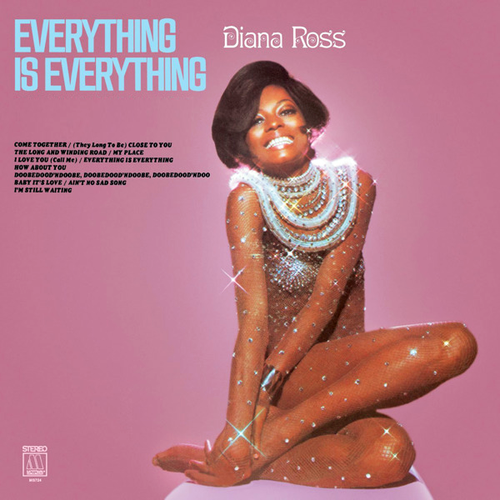
Diana Ross’ Second Solo Album: ‘Everything Is Everything’ (1970) – Review & Story

US Release: 10/1970 (Motown Ms 724)
UK Release: 4/1971 (Tamla Motown 11178)

Track Listing

My Place

Ain’t No Sad Song

Everything Is Everything

Baby It’s Love

I’m Still Waiting

Doobedood’ndoobe, Doobedood’ndoobe, Doobedood’ndoo

Come Together

The Long And Winding Road

I Love You (Call Me)

How About You

(They Long To Be) Close To You

Chart Positions: US Billboard R&B #5 UK #31 US Billboard Pop #42 Canada #67

Singles from Everything Is Everything

UK Release: 23 July 1971 (TMG 781) US Release: 13 October 1971

Chart Positions: UK #1 Ireland #1 New Zealand #11 US Billboard R&B #40 US Billboard Pop #63 Australia #69 US Cash Box #71 Canada #81

Released: 28 April 1972

Chart Positions: UK #12

“I began to feel knots in my stomach when I knew there would be no overall concept to the album.” Deke Richards

I wasn’t satisfied with the whole album, on which there are only one or two songs I really like. When I do an album, I like it to be good all the way through. I don’t want throw-outs.” Diana Ross

These days, it’s common for an artist to release one album every two to three years, sometimes even longer. Back in 1970 at Motown, Berry Gordy went to great lengths to ensure his leading lady, Diana Ross, was kept in the spotlight. Just months after her self-titled solo debut, Motown issued Diana’s sophomore solo album. Titled Everything Is Everything, the project was rapidly thrown together with production entirely handed over to Deke Richards and Hal Davis.

Worried about the disappointing sales of ‘Reach Out And Touch (Somebody’s Hand)’ and unsure of how the public might react to Diana’s debut album, Berry Gordy wanted a much more commercially slanted, radio-friendly album at the ready, just in case the debut flopped. In fact, at one point, both the debut and Everything Is Everything were marketed at the same time.

Thankfully, after the blockbuster success of ‘Ain’t No Mountain High Enough’, Ashford & Simpson were rapidly appointed as producers of a follow-up single and album, so this second solo album quickly became something of a lost classic coming in between two stand-out albums in her career. ‘I’m Still Waiting’ was belatedly released a year later by which time she was already enjoying success with her third album, so with no singles at the time to help promote the project it only enjoyed a brief run on the UK and US album charts.

Deke Richards was only twenty years old at the time and said he had been a fan of Diana for several years; to be producing a whole album for her was as daunting as much as it was an honour. He had been riding high on his success with the Jackson 5 and received several accolades for his work on classics such as ‘I Want You Back’, ‘ABC’ and ‘The Love You Save’. Deke had also worked with Diana back in her days as a Supreme including on the no.1 hit ‘Love Child’ and on Diana Ross & The Supremes Sing & Perform Funny Girl. Berry Gordy urged Diana to work with new younger songwriters and producers as an experiment.

Diana said at the time: “It’s a good way to see what kind of futures they can have at Motown, and since I’m searching for direction and they’re searching for identities, it seems to work.”

While Deke Richards said his first impression of Diana was that she seemed pushy: “Maybe that was because I was so laid-back and nervous. I didn’t really know how to handle this thing, producing the star of Motown. Though she always did what I told her to do, she was checking me out closely because I was still sort of new to the fold and also so young. It was a little intimidating because I idolised her, yet I knew I had to take control of the recording sessions.”

It’s hard not to conclude this album doesn’t hang together nearly as well as Diana Ross, nor did it stretch or challenge her vocally as that album had. A rather disjointed collection, it lacks any overall theme or continuity. On the plus side, Everything Is Everything is still a thoroughly entertaining piece of work and definitely now stands as a classic entry in Diana’s catalogue. It’s just a shame that at the time of its initial release it was somewhat overlooked.

By 1970, the familiar and distinctive Motown sound was beginning to fade away as the company prepared to move its headquarters from downtown Detroit to swinging Los Angeles. However, that Motown magic is still very apparent on this album, even if much of it was recorded in LA. The project opens on a high with the swinging, bouncy and distinctly Supremes-like ‘My Place’. Baring a tinny sound like most of the classic Motown records in the sixties, this energetic Hal Davis production has Diana singing with all her heart and soul. It’s a youthful performance, brimming with sparkle and vibrancy that does signal her going backwards because she sounds like she’s back with The Supremes, but it’s such a delicious vocal that that almost doesn’t matter.

Deke Richards remembers in the booklet accompanying the 2008 expanded edition CD issue of Everything Is Everything: “There was one place near the end where Diana’s voice distorted during the chorus. It drove me crazy. I kept telling Hal (Davis) to bring her back in and redub that part. He felt it wouldn’t match up. I gave in for one reason—when she hit the note, it actually created a unique harmonic distortion. So I left it in.”

‘My Place’ was highlighted by Ed Ochs in his review of the album for Billboard magazine, writing: ” Our local ears predict that ‘My Place,’ from Diana Ross’ ‘Everything Is Everything’ LP will be her next single.” It definitely sounds like a true Diana Ross and Motown classic.

More raw, urban and gritty is the compelling ‘Ain’t No Sad Song’, which steers into a light but exceedingly clever funk. There’s a much harder edge in Diana’s earthy and husky vocal. She aggressively bites into the lyrics, sounding perfect in this lower range and a welcome detour from the album’s fun, catchy opener. In Pop Matters review of the Expanded Edition in 2008, they noted the uncanny vocal resemblances of Diana and Eddie Kendricks of The Temptations. A definite highlight of the project, the song was written by Diana’s own brother, Chico, Hal Davis and Berry Gordy IV, the son of the Motown founder who on the original vinyl release was listed as ‘The Bear’.

After this funk-ridden number comes the title track, which again reverts back to a Supremes-like sound. This seems strange when you consider Diana was trying to establish a new identity and redefine herself as a soloist. Even so, it’s a delightful little ditty, Diana’s voice as angelic as ever, echos of ‘Baby Love’ pulsating throughout with a neat, contemporary twist. The lyrics are strictly in the simplistic vein as those early Supremes classics, and nothing wrong with that as these are indeed sublime all-time pop classics but after making such a stylistic, credible change on the debut, it almost seems redundant in the scheme of things.

The phrase “Everything Is Everything” was considered hip at this time (seems laughably dated now) and was already circulating as the title song of Donny Hathaway’s debut album on Atco Records, and Latin star Eddie Palmieri had also written a song with the same title. Written by Margaret Gordy, once Berry Gordy’s girlfriend, she would often use his surname as a songwriter. They had a son together, Kennedy, who at that point was a tender six years old. Kennedy appeared briefly on Diana’s first solo television special in 1971 and years later emerged as an artist himself, more famously known as Rockwell.

Next up is a song written by Marvin Gaye, Anna Gordy-Gaye and Charles Laskey, ‘Baby It’s Love’. One of the best of the album sessions here, its driving percussion and nifty guitar work is made even more effective by the glorious, roaring saxophone interludes woven in and out of the verses and chorus. Not at all dissimilar to the kind of work Marvin Gaye was recording and producing at this point, the overdub sessions for ‘Baby It’s Love’ and Marvin’s ‘What’s Going On’ took place back to back. Hearing the two tracks, you can detect the vast similarities in the alto-saxophone lines by Eli Fountain. Diana’s young, naïve -sounding voice remains sumptuous and refreshing throughout, and this sounds like it could quite easily have been a hit in its own right. A pounding, soulful arrangement to boot, the track’s subtle urgency climaxes in a big burst of energy as Diana and the instrumental shift up in gear.

‘I’m Still Waiting’ is a beautifully melodic, well-crafted ballad penned by Deke. The song tells the sentimental, touching story of a young girl who’s heartbroken and distraught when her playground sweetheart has to leave her to move away in a far-off location. Her boyfriend tries to reassure her by promising that some day, true love will come along into her life and that she’ll then forget all about him. However, once she’s grown up, she’s never able to relinquish the love she had for him, imploring her true love to return. Diana’s sweet, evocative tone is soft and soothing throughout, conveying natural warmth and passion while evoking a strong air of vulnerability.

Deke recalled the process of composing this timeless classic: “I wrote the original basic chart, which I wanted to be simple and unassuming. At the last minute, I wrote an alternative bass- and drum-line just in case it sounded too straight. I knew it was too hard and too funky, but I cut it anyway. I cut it again with the original, softer, easy-flowing feel. Then I combined both arrangements. This way, I figured I could have my cake and eat it too. Diana liked the song. I was trying to keep her sounding young, which was unusual for Diana. I had to hold her back at times, especially on the chorus.”

Berry Gordy wasn’t sure of the track, apparently telling Deke that he said it didn’t sound at all like Diana. Deke agreed, but asked him to imagine she was playing the part of somebody else. A deceptively simple piece of work, here Diana is able to use her acting abilities to tell this story-song.

British radio DJ Tony Blackburn (a huge, lifelong fan of Diana) heard ‘I’m Still Waiting’ on the album and loved it so much that he urged the Tamla Motown label to release it as a single and guaranteed to play it at least ten times a day on his radio show in return. Tamla Motown agreed and Tony kept his end of the bargain. ‘I’m Still Waiting’ catapulted to the top of the UK chart in 1971, remaining there for four weeks. However, when it was released in the US on the strength of its enormous UK success, the track only crawled into the lower end of the chart, stopping at a dire #63. It fared little better on the R&B chart. ‘I’m Still Waiting’ seemed to be caught in what some called the ‘Ain’t No Mountain High Enough’ backlash.

Deke Richards, though thrilled the song had become a number-one hit in the UK, was devastated it was such a poor seller in his home country: “It broke my heart. It was the third-biggest-selling record of all time in England, and I was pleased about it, but that wasn’t home. When Motown released it here, it flopped, and I was shocked. She started at the sky (with Ain’t No Mountain High Enough), and there was nowhere to go after that great song. Nobody expected a nice little ballad from Diana at that point, and that’s what I had. It was a pretty song that just wasn’t good enough.”

Despite its lack of significant chart action in the US, ‘I’m Still Waiting’ remains one of the most popular and acclaimed songs in her long, illustrious career. When performing the song in the UK, Ms.Ross was totally bemused by the thunderous applause she received when she first began performing the song as it had intended to be just been another album session.

Another song written by Deke, ‘Doobedoodndoobe, Doobedoodndoobe, Doobedoodndoo’, is an alluring, majestic mid-tempo number with religious undertones, coming complete with shimmering gospel backing vocals and a dazzling performance from Diana. Endearingly disjointed, this episodic song careers along with laid-back grooves on the verses before spiralling into a choir-laden chorus. The essence and beauty of Diana’s golden rich voice burns bright here and probably the most challenging vocally on the album, Diana called on to fluctuate between her lower and higher range.

Deke stated in 2008 that he considered the song to be one of his best writing efforts and had pencilled in the title as ‘I Just Started Living’. It was Berry Gordy that wanted the ‘Doobedoodndoobe’ title, convinced that curiosity in this odd-sounding title would practically guarantee radio airplay. This was much to Deke’s chagrin but Berry got his wish. The track was lifted as a British single in 1972 to become a #12 hit. The belated release was mainly to fill the void of no new material from Diana, as at that time she was working on her screen debut in Lady Sings The Blues.

Even more startling and one of the more adventurous and outstanding tracks is the thrilling version of The Beatles’ ‘Come Together’. Burning undertones of hot pulsating funk in the Motown backing and her dynamite performance make this a rocking and credible take. Many artists have recorded this Beatles classic, but Diana’s ranks among the very best, as it’s given a deep and more soulful vibe that zooms in on that psychedelic feel, with lots of bizarre, synchronised noises on the thrashing, echoey climax. R&B radio stations jumped on this, playing it constantly, so much so, it made Jet magazine’s top twenty singles list. Yet in spite of these accolades, like the album itself, the track has since slipped under the radar, only known amongst die-hard Diana Ross fans which seems a crying shame. There is an unbelievable amount of her recordings that are just begging to be rediscovered and her rendition of ‘Come Together’ is definitely one of them, in my opinion.

Deke recalled in the CD notes to the Expanded Edition in 2008: “The entire track was recorded live at RCA in Hollywood. During the session, I was in the middle of the fade when I decided to make a change in the arrangement. From inside the control room, I signalled the musicians to continue and then walked quietly into the studio. While the musicians played, I went over and talked directly into the ears of the rhythm section to tell them what to do. I didn’t tell the strings and brass. I didn’t have the time to write all their parts. In the background you can hear them stop playing sporadically. I had my conductor bring them back in when I gave the signal. Of course, everyone looked at me as if I was crazy. When I finally dubbed in Diana’s voice, I had her talk to the band as if she was controlling the entire session. The end result is fun, free and kinda funky.”

Deke Richards intended to keep The Beatles’ cuts for a proposed project called Diana Ross Takes On The Beatles, but the idea was scrapped, hence the reason for the inclusion of ‘Come Together’ here. Also included is another session from that shelved album, ‘The Long And Winding Road’. Credited to Paul McCartney and John Lennon, this had been recorded by the fab four for their album Let It Be, and when extracted as a single, it became their twentieth and final American number-one hit. Diana does an excellent job on her rendition, her breathy, seamless voice complementing the steadily sweeping, exotic-flavoured music to good effect. She also enhances her voice at points, holding on to high, lingering notes impressively.

What demonstrated her growing vocal power is a stunning reworking of Aretha Franklin’s I Love You (Call Me). Although Diana’s voice doesn’t carry the volume and power of Aretha Franklin’s, she still rates as a great singer in her uniqueness, who can throw her voice around to fit into any genre, any mood and in any pitch. This is perfectly illustrated here, as an untypically raw sound in her voice pours out as the track progresses. Deke Richards recalled in the liner notes to the 2008 reissue: “I always wanted to cut [this song] on Diana, to take her away from the pop sound, and give her a chance to cut loose… There was very little direction…Diana already knew the tune and liked my arrangement ”  Even though the song was an album-only track, it went on to be nominated for a Grammy in the R&B Female Vocalist Category the following year.

Everything Is Everything is then driven back into Motown territory on the bouncy ‘How About You’. Previously recorded by Chris Clarke in a far more subdued style, Diana’s take is more upbeat and energetic. Containing many of those trademark, rushy, Motown beats, it’s another glorious performance from Diana over a winning blend of soul music crossed with a Broadway vibe. Incredibly catchy, ‘How About You’ was considered for release as a single but instead popped up as the B-side to her third solo single ‘Remember Me’.

The album closes with an enthralling version of ‘(They Long To Be) Close To You’. The song had first been recorded by Richard Chamberlain in 1963, followed by Dionne Warwick that same year (Dionne then rerecorded it in 1964, accompanied by a Burt Bacharach arrangement, for her studio album Make Way For Dionne Warwick). However, it’s The Carpenters’ treatment that remains the most famous and popular. Diana certainly stamps her own mark on it, with a beautiful glowing performance. She also gives the song a distinctly more soulful feel in comparison to the rather saccharine pop treatment The Carpenters gave their version. Diana’s rendition resurfaced later as the B-side to her fourth American single, ‘Reach Out I’ll Be There’.

Everything Is Everything didn’t receive the same critical or commercial success as Diana’s debut album. It stalled at a disappointing #42 in America, but bounced into the R&B Top 5. Success in the UK was equally lukewarm; it climbed no higher than #31. However, contrary to this disappointing commercial impact, Diana was sitting pretty and could do no wrong. In late 1970, she was named by Billboard magazine as that year’s number-one, pop, female vocalist.

In the summer of 2008, the album finally resurfaced (and not before time). Titled Everything Is Everything: Expanded Edition, it boasted several unreleased tracks from the Motown vaults. The compelling ‘Wish I Knew’ was written by Deke Richards and Debbie Dean and also produced by Deke. This stunning track opens with light, dreamy, shimmering music, making way for a magnificently sparse orchestration and abrupt, dramatic interludes. Diana’s performance is impressive and her diction and lyrical phrasing impeccable. She had previously recorded an even better version of this song in 1968 while with The Supremes (although the backing vocals were never completed, so it was effectively a Diana Ross solo). It can also be found on the 2008 Diana Ross & The Supremes compilation Let The Music Play: Supremes Rarities 1960-1969/Motown Lost & Found.

‘What Are You Doing For The Rest Of Your Life?’ written by Alan Bergman, Marilyn Bergman and Michael Legrand, and produced once again by Deke, is included in its entirety. This Academy Award-nominated song, written for the 1969 movie The Happy Ending, performed by Michael Dee, was another of the sessions excluded from the original release of Everything Is Everything. Before the track kicks in, Diana can be heard saying, “What’s that note, Deke, before I get to it? Give it to me.” Then she clears her throat ready to proceed as he replies, “It’s this note next to it.” Her performance is haunting and positively spine-tingling.

The striking late-night sound of George Harrison’s Something was another of the sessions intended for the cancelled Diana Ross Takes On The Beatles. It opens with a beautiful saxophone interlude, mixing with light drumbeats and lush, sweeping strings. I always love that engaging sound of the sax, and it fits into the production neatly. Diana delivers a beautifully understated performance on an arrangement that wildly swerves into big band and swinging jazz, especially at the bridge of the song.

Following the three glorious canned sessions from the original album, another version of ‘Ain’t No Sad Song’ pops up, this time with alternate lyrics courtesy of Berry Gordy, Hal Davis and Chico Ross. Unlike the original, this version begins with the chorus. I’ve always loved this funky little number, and although it doesn’t quite manage to eclipse the original, it still emerges as a worthwhile inclusion on this reissue. There’s also an alternate vocal performance of the stunning, saxophone-led ‘Baby It’s Love’. Again this makes for wonderful nostalgia as the recording session is featured in full, allowing us to hear Diana preparing her vocals at the start. It captures a twenty-six-year-old Diana in the recording studio, having fun and working her unique magic to full effect.

The updated 1982 remix of ‘Come Together’ was intended for the cancelled album, Revelations. Again this version doesn’t outshine the original mix on Everything Is Everything, but it does boast bold, inventive and adventurous, spiralling rhythms. The chorus rockets with Diana’s crystal-clear lead, backed by soaring gospel-backing vocals.

The 1990 Phil Chil remix of ‘I’m Still Waiting’ has a much funkier urban beat, successfully bringing the classic UK 1971 chart-topper, ‘I’m Still Waiting’, into the 1990s. Phil was one of the hippest remixers at the time. This version steadily climbed to #21 in the UK chart in the summer of that year.

Back to 1970 and in December Diana Ross was the cover story on Soul Illustrated magazine, under the heading ‘How Diana Ross got this way’.

On 4 February 1971, Diana guest-starred on Make Room For Granddaddy with comedian Danny Thomas. and that same month, following the announcement of her marriage to Bob Silberstein, she appeared on the cover of Soul newspaper. In April, she appeared in a spread for Harper’s Bazaar magazine and days later was on the cover of Jet magazine with the heading ‘The New Diana Ross’.

DIANA ROSS (1970)

Track Listing:

1.  Reach Out And Touch (Somebody’s Hand)

2.  Now That There’s You

3.  You’re All I Need To Get By

4.  These Things Will Keep Me Loving You

5.  Ain’t No Mountain High Enough

6.  Something’s On My Mind

7.  I Wouldn’t Change The Man He is

8.  Keep An Eye

9.  Where There Was Darkness

10. Can’t It Wait Until Tomorrow

11. Dark Side Of The World

Release Date: 19 June 1970   

Motown (MS 711)

Chart Positions: US Billboard R&B #1    Canada #13    UK #14    US Billboard Pop #19

Singles from Diana Ross

Release Date: April 1970

Motown (M 1165)

B-Side: ‘Dark Side of the World’

Chart Positions: US Billboard R&B #7    US Cash Box #10    US Billboard Adult Contemporary #18    US Billboard Pop #20    Canada #23    UK #33    Australia #56

Release Date: July 1970

Motown (M 1169)

B-Side: ‘Can’t It Wait Until Tomorrow’

Chart Positions: US Billboard Pop #1    US Billboard R&B #1    US Cash Box #1    UK #6    US Billboard Adult Contemporary #6    Canada #7    Ireland #14    Australia #25

Year-end Charts (1970): US Billboard Pop #6    US Billboard R&B #16    Canada #97

As soon as Diana Ross left The Supremes to embark on a high-profile solo career, the media inevitably hyped up supposed competition between her and The “New” Supremes (which is how they were known for a short time after Diana’s exit). Fans also seemed divided as to which act to support.

Indeed, Diana opened her very first solo engagements with the words: “Good Evening, ladies and gentlemen, and welcome to the let’s-see-if-Diana Ross-can-make-it-alone show” which was greeted with both laughter and rapturous applause. While cynics speculated she would fail as a solo act, Diana need not have worried. Leaving the number-one girl group of all time may have been a huge gamble, but it marked the beginning of something even bigger.

Ms. Ross performing at the Eden Roc Hotel in Miami Beach, Florida. [Friday 13 March 1970]

Her first solo engagements at the Eden Roc Hotel in Miami Beach, Florida, were a success in March 1970 while selling out at the prestigious Waldorf-Astoria in New York every single night for the entire three-week run in September 1970. No expense was spared with the ritzy presentation, Berry Gordy investing over a hundred thousand dollars on the show, which included eight dazzling costume changes, three background singers called The Blackberries, two male dancers and a set that included pop and rhythm-and-blues numbers such as a compulsory Supremes medley, ‘Jesus Christ Superstar’, ‘Don’t Rain On My Parade’ and the Leading Lady medley from the G.I.T On Broadway TV special the previous year in which she had starred alongside The Supremes and The Temptations.

Reviews of the show were quite mixed at first. Her opening act, ventriloquist Willie Tyler, recalled to author J. Randy Taraborelli: “It was as if she had gotten a bad reputation just by leaving the Supremes behind. Also, I think she was trying too hard. Now, she had to prove herself, prove that her ability warranted a solo career, and so she was singing, dancing, changing clothes, doing everything she could think of to razzle-dazzle. I recall her being very disappointed by the reception. Berry told her to take her time and wait it out. Soon, he said, the audiences will come to her side.”

Ms. Ross performing at The Ambassador Hotel’s Coconut Grove nightclub in Los Angeles, California – 30 July 1970

Diana also appeared on the front cover of Ebony magazine, the article heading Why Diana Ross Left The Supremes. In this interview Ms.Ross admitted that this was a daunting move for her: “You know how a runner has somebody to pace him?  Well, Mary [Wilson] and I have been pacing each other for years.  Now, out on my own and without anybody to pace with, it may be a problem for me…” Berry Gordy, on the other hand, was far more confident, telling the media: “She’s not really taking a big chance because people are buying her like mad. Vegas is buying her, Miami is buying her, the Waldorf in New York. Like the stock market, she’s up now because everything she’s done has been a total success. If Diana is going to do it, she’s going to be the best out there. She will be sensational if she does nothing but stand up there and sing.”

Ebony photo session

Back in September 1969, when still officially a Supreme, Diana was teamed with producer Bones Howe. Under his guidance she recorded four excellent tracks, namely Laura Nyro’s ‘Time And Love’ (originally intended as Diana’s debut solo single at one point, it was later rerecorded by The Supremes for their Touch album in 1971, using the exact same backing track as Diana’s, and then rerecorded by Barbra Streisand); ‘Stoney End’ (a Top 10 hit for Ms. Streisand); the endearing ‘The Interim’, written by Jimmy Webb, and the enchanting ‘Love, Lines, Angles And Rhymes’. These all contained excellent vocals from Diana and were all, musically, miles apart from anything she had recorded with The Supremes. Howes had also made instrumental tracks for ‘Ooo Baby Baby’ and ‘Raindrops Keep Falling On My Head’, although at the time of writing this, no vocals from Diana have been found.

Diana’s then-manager, Shelly Berger, was quoted in the CD notes for the 2002 reissue of Diana Ross: “I’d known Bones for a while, and he was very hot at the time, particularly with The 5th Dimension. The thought was we should go outside the company to do something completely different for Diana’s first album.”

Richard Avedon photo session for 1970 issue of French Vogue.

As these tracks steered so far away from her style and sound with The Supremes, even though undoubtedly showcasing her versatility and were by far the most mature songs she had recorded at this point, Berry Gordy knew this solo project was so vital. He knew it was imperative at this crucial stage in her career not to alienate Diana’s public. Deciding to play it safe, Berry called upon the ever-reliable Nick Ashford and Valerie Simpson to be at the creative helm.

As Diana said to black music journalist and author David Nathan: “Berry called them in. They in turn started planning the album. I wasn’t checked in with, like, which songs do you want to have? And all that kind of thing. They just put together the songs, and we went in and did the album. I just loved working with the two of them.”

Berry told Ashford & Simpson he wanted a little diversion from the Motown sound but needed material that would bring her to the foreground as a solo artist. The pressure was definitely on to deliver. Valerie Simpson remembered that all eyes seemed to be on her and Nick: they knew failure wasn’t an option.

On 20 and 21 January 1970, Ashford & Simpson, in an inspired creative burst, came up with the following tracks: ‘Reach Out And Touch (Somebody’s Hand)’, ‘Keep An Eye’, ‘Something’s On My Mind’ and ‘Dark Side Of The World’, which Valerie Simpson said were universal songs. Diana was immediately captivated by ‘Reach Out And Touch’ as it was a sing-along song with a lasting effect. During a visit to her home town of Detroit, Diana became alarmed (and equally dismayed) at the rising level of poverty, urban decay and the escalating drug problem. She felt strongly about ‘Reach Out And Touch’ because of its universal lyrics, conveying perfectly how she felt about the problems with the youth culture, which she infinitely believed could be solved if people started caring about each other.

Diana insisted upon this be her all-important debut solo single. Despite her good-hearted intentions, it’s a fairly mundane song with a waltzing rhythm that completely defects from the ever-compulsive Motown sound. Yet its anthem-like qualities most definitely grow on you, and Diana’s touching, angelic-sounding performance is so sweet, heartfelt and genuine that it’s nearly impossible to find any fault with the now-legendary recording. A glossy mixture of pop, soul, folk and gospel, Diana delivers a strong, incisive vocal, and her ad-libs towards the end convey a far more commanding quality in her voice that hadn’t been there before with The Supremes.

In April 1970, it was released as her first single, backed with ‘Dark Side Of The World’ as the flip. To tie-in with its release, Diana appeared on the front cover of Cash Box magazine.

Critics were eager to see whether the “New” Supremes or Diana Ross would win the chart battle. Unfortunately, ‘Reach Out And Touch’ wasn’t the big hit everyone expected. In America, it struggled to #20 on Billboard magazine’s Pop chart though fared better on the R&B listing by peaking at #7. In the UK, the single stalled at a meagre #33, which was a huge let-down. After all, this was the lady who had topped the charts twelve times as the lead singer of The Supremes.

Ebony photo session in 1970

To make matter worse, The New Supremes’ ‘Up The Ladder To The Roof’ totally wiped the floor with ‘Reach Out And Touch (Somebody’s Hand)’ shooting into the Top 10 on both sides of the Atlantic. At this point, a question mark still hung over Diana’s solo career as far as critics were concerned while her detractors revelled in what they saw as an abject failure. Regardless of this mediocre start, Diana’s debut has since risen in status as a true classic, remaining a significant highlight of her concerts throughout her long career, in which she enticed her audiences to hold hands and sway and sing along with her.

Richard Avedon photo session for 1970 issue of French Vogue.

Her second single, however, brought the commercial success she had become accustomed to with The Supremes: the rip-roaring pop/soul blockbuster ‘Ain’t No Mountain High Enough’. Ashford & Simpson came up with this perfect masterpiece by completely dismantling and re-arranging the version Marvin Gaye and Tammi Terrell had taken high up the chart in 1967. Given that Tammi Terrell passed away, tragically, that year, Diana was sceptical at first, though on hearing the radical new arrangement, her reservations cleared and she conceded to record it.

Nick Ashford was quoted in the book The Billboard Book of Number One R&B Hits, “At that time, lengthy records were starting to come out: six, seven minutes.  We didn’t have any songs like that, but we wanted Diana to feel she was into new things.  We thought to stretch ‘Ain’t No Mountain High Enough’ and we thought how sexy and silky her voice was.”

The track marked a startling fusion of a highly-charged gospel arrangement, by Paul Riser, with a rousing classical music slant, provided by the Detroit Symphony Orchestra, giving the recording a grand, highly theatrical feel. Paul Riser recalled to Billboard: “We cut the rhythm track in Detroit.  The strings and horns were a little too sophisticated for the players there, so we went to New York to do it, to get the best possible performance.” Diana delivers engaging spoken passages in a gloriously sensual voice as the shimmering music, and soaring gospel backing vocals gradually build to an orgasmic climax, where the song’s title is finally and triumphantly sung. Diana’s voice surfboards over the dramatic tidal wave, backed by a thunderous bass line and blaring horns, making for a goose-bump ride that’s still magnificent to this day!

Harry Langdon photo session, 1970

.

Berry Gordy didn’t like the version that much when he heard it, particularly the spoken introduction. Ashford & Simpson intended this to be Diana’s first single, but he was too apprehensive about the song and held it back. However, once radio DJs started playing it, the recording was released as a single. The full version featured on her eponymous debut album clocked in at over six minutes long, but for the single, it was edited to the standard three and a half minutes. Nonetheless, it retained its full bombastic effect. Michael Thomas later wrote in Rolling Stone magazine: “That record, ‘Ain’t No Mountain High Enough,’ is one of the ten best singles ever made. Diana Ross, when she talks on a record in that petulant dirty whisper, could sell me anything. Diana’s solo records, under the direction of her new handlers Nick Ashford and Valerie Simpson, are some of the most gloriously melodramatic virtuoso pop since Phil Spector did the Righteous Brothers.” 

Harry Langdon photo session, 1970

Lifted in July 1970, the single met with wide critical acclaim, Billboard predicting: “This heavy updating of the past Marvin Gaye-Tammi Terrell hit will prove a sales and chart topper for her first smash.”  They were spot on: The single rapidly hit pole position on both the US pop and R&B charts, to become her first solo chart-topper and first solo million-seller, shifting well over 1.2 million copies in America alone.

Success in the UK was assured; who could honestly resist this? Ain’t No Mountain High Enough raced to #6, heralding the start of a permanent love relationship with the British public. The song also became the first in a long line of Grammy Award nominations. In fact it seems a travesty that this epic masterpiece didn’t win any awards but at the same time anyone who had any doubts Diana Ross couldn’t survive without The Supremes were silenced. Diana Ross the solo star had arrived! Around this time, she graced the cover of Record Mirror and headlined at the Carter Barron Amphitheater under the title The Diana Ross Show.

Record Mirror photo session – 30 June 1970

There were (surprisingly) no other singles issued from her superb debut album (simply titled Diana Ross) which was released in June 1970 (charting at the same time as The “New” Supremes’ debut Right On, and Diana’s farewell performance from the group, released as a double-LP) but that’s not to say there weren’t any other tracks worthy of single release. For instance, a spine-tingling version of Marvin and Tammi’s ‘You’re All I Need To Get By’ proved a great experiment for the new and more powerful Diana Ross sound. The depth, character and drama in her voice pour out on this terrific number, and her version stands, arguably, as the definitive reading. Given a slow-burning approach, the rhythm rises to a stunning climax, Diana’s vocals really hitting their full potential as the arrangement crackles with intensity. The repetitive bass line and bluesy feel are engrossed in a hypnotic style, with a backdrop of dreamy, gospel-infused backing vocals.

Harry Langdon photo session, 1970

The joyous ‘Now That There’s You’ is another commercially slanted number that remained hidden away on the album. Like ‘Ain’t No Mountain High Enough’, Diana talk-sings through the duration of each verse, before the chorus kicks in, during which she’s backed by a string of gospel harmonies. Ultimately a feel-good number, Diana sways from moments of yearning vulnerability to shining self-assurance in full command of her new vocal style and providing some arresting ad-libs in the last minute of the song. She sounded relaxed and confident throughout the recording and you could hear significant progress as a vocalist. First recorded by Valerie Simpson in 1969, it was later included on her Exposed album in 1971 and used the same backing track as was used for Diana’s. In their review of Diana Ross, Billboard magazine hailed this as one of the stand-out tracks.

Harry Langdon photo session, 1970

Recorded when she was still with The Supremes, ‘These Things Will Keep Me Loving You’ doesn’t actually include Mary Wilson or Cindy Birdsong. The track was originally intended as Diana’s swansong with the trio, but was sidestepped for ‘Someday We’ll Be Together’. It was then scheduled to be her solo debut, but when Diana was adamant ‘Reach Out And Touch (Somebody’s Hand)’ be her first, it was again put on the backburner. By the time her first single had dipped out of the charts, DJs became interested in ‘Ain’t No Mountain High Enough’, so any plans for ‘These Things Will Keep Me Loving You’ being released as a single were shelved.

Interestingly, this was the only song here not written by Ashford & Simpson; the credits read Johnny Bristol (who worked with Diana on ‘Someday We’ll Be Together’) and Harvey Fuqua. Without a doubt this would have been a huge smash if released as a single. That pure Motown sound is evident on the bouncy arrangement, complemented by Diana’s crisp, subdued performance. Some brief backing vocals interludes from Johnny Bristol and gospel harmonies all add to the fire and soulful flavour. As Motown fans know, The Velvelettes recorded the original version in 1966; it represented their third American smash and their only British hit upon its release in 1971.

While the first half of the album holds a commercial quality, the second half is lost amidst a dark and swirling mood, although it begins with the relatively light mid-tempo ‘Something’s On My Mind’. First recorded by Rita Wright (later known as Syreeta) in 1968, Diana’s delivery is refreshing and soulful. Her diction and phrasing is both immaculate and emotive, singing the song with real clarity.

She sounds more brassy and playful on another incredibly contagious number ‘I Wouldn’t Change The Man He Is’. Previously recorded by Blinky Williams back in 1968, the track holds a bluesy feel that encapsulates a swinging and immediately striking jazz-like vibe. Here, Diana is able to cut loose at the bridge, revealing a new confidence in her voice and delivering a tour-de-force performance. These numbers really captured the top end of her vocal range, exactly what Ashford & Simpson were striving for. Never before had she sounded so strong vocally, alternating between a low, subdued and breathy style, to pushing right up to the maximum of her vocal abilities.

Harry Langdon photo session, 1970

‘Keep An Eye’ sends a shiver down the spine as the mood darkens and becomes more sombre and mellow. The song depicts a bitter tale of paranoia and infidelity, which she had previously recorded on The Supremes’ album Love Child. This solo version is more fully formed, holding more fire and flair, and is far more dramatic. The funk-driven rhythm section is highlighted by Diana’s chilly, almost detached, textured delivery as she glides across the musical landscapes with her interpretive craft.

Harry Langdon photo session, 1970

‘Where There Was Darkness’ is hauntingly beautiful, with a divine and passionate performance from Diana. Although the strings at the intro sound odd and distorted (this wailing, ghostly sound is also repeated at the bridge), it leads into an arrangement that drifts along compellingly, before changing tempo as it brings us into the chorus.

Even more dreamy and mellow is the gorgeous ‘Can’t It Wait Until Tomorrow’, which remains mostly calm as it sails along smoothly, leading to an understated saxophone interlude at the bridge. Not the most exciting track on the album to be fair, but certainly continues the high calibre fare, Diana’s vocals sounding like a forerunner to her foray into jazz with Lady Sings The Blues. This track also appeared as the flip side to the number-one hit ‘Ain’t No Mountain High Enough’.

Michael Ochs photo session for Harper’s Bazaar magazine, 1970

The project then winds down with the spellbinding ‘Dark Side Of The World’. This song had first been cut by The Velvelettes in 1967 under the title ‘Bring Back The Sunshine’ before Ashford & Simpson completely transformed the arrangement for Marvin Gaye in 1969 (although his take would remain unreleased for several years). Diana’s version is completely immersed in the stirring, atmospheric and soulful arrangement, delivering one of her most impressive vocal performances on the album, the track itself most definitely a highlight. With swirling strings and a distinctly sombre feel, this serves as a superb end to a thoroughly compelling album.

Overall, the Diana Ross album is a thrilling debut, drawing mostly positive reviews from critics, and this has since gone on to be lauded as some of her most stunning solo work. A fantastic start to Diana’s solo career, and something of an underrated masterpiece to say the very least! It stands as an artistic statement, letting the world know that Diana Ross the solo star was a force to be reckoned with.

The album’s startling front cover shows Diana dressed as a child, wearing cut-off shorts and T-shirt, holding an apple and gazing into the air with an impish grin on her face…a far cry from the glamorous diva we all know and love. According to Harry Langdon, the photograph was intended to go back to basics, stripping her of the showbiz trappings, to reflect her humble beginnings in Detroit. When Berry Gordy had summoned Langdon to his office demanding to know what on earth the logic was behind the photo session, he explained to Mr. Gordy: “Diana Ross has been so successful with all of the extremely fortunate people in the world, I wondered what it would be like to appeal to her own people? The black people in the projects and the people who don’t have the money to see her perform? The people who can only buy her records? Here, in my photo of her, she looks like one of the masses. She’s one of them.” After all, she was in effect starting again as a soloist and had to prove herself all over again. Years later, in 2007, during an interview with Gay Times magazine , Diana was asked to name her favourite album sleeve and replied that it was her solo debut.

Harry Langdon photo session for her debut solo album, 1970

Diana Ross wasn’t quite the blockbusting success it deserved to be although it was a strong seller, later certified Gold by the RIAA in the US. It peaked in the US chart at #19 while topping the R&B chart. It was also a well-deserved Top 20 success in the UK, where it peaked at #14.

Michael Ochs photo session for Harper’s Bazaar magazine, 1970

On 26 March 2002, when Diana celebrated her fifty-eighth birthday, this was rereleased to include the original Bones Howe sessions. It also boasted a live version of ‘Something’s On My Mind’, recorded at the The Grove in Los Angeles on 7 August 1970 and alternate mixes of ‘These Things Will Keep Me Loving You’ and ‘Ain’t No Mountain High Enough’. There’s also an alternate vocal of ‘Now That There’s You’. Following its welcome reissue, the album garnered even more glowing reviews than it had upon its original release.

Critical reaction to her solo debut has been mostly positive over the years with AllMusic Guide hailing this as being her most stunning work during her Motown era. Robert Christgau in his review for Village Voice was less enthused, writing: “The sound of young America grows older, replacing momentum with progress and exuberance with nuanced cool. Producers Nick Ashford and Valerie Simpson provide all but one of the songs–they’ve written a couple of great ones for Marvin & Tammi in the past. Unfortunately, the same couple (of songs) provide two of the three high spots here. And there ain’t no high spot high enough.” Billboard magazine was far more complimentary, writing “Diana Ross is as potent on the solo trail as she was when leading the Supremes.”

On 1 October 1970, Diana appeared on The Merv Griffin Show for performances of ‘Reach Out And Touch (Somebody’s Hand)’ and ‘Ain’t No Mountain High Enough’, plus an interview.

In an interview with David Nathan for Blues & Soul magazine, Diana reflected on her first year as a solo artist: “I spent ten years building a name, you know…an image…and we became successful. But it was a change that just had to happen. I couldn’t have stayed where I was. The fear was, you know, will I be okay? Will my records be hits? People had done some of the same things and weren’t successful. Mary Wells left Motown and went to other companies and tried, and nothing materialised. I think the same thing (happened) with Florence Ballard. When she left, she was going to get married and have children, and then she went to other record companies. When you make a decision to split, you need to take responsibility that you’ve caused and created whatever happens.”

Michael Ochs photo session for Harper’s Bazaar magazine, 1970
 Photographed by Lawrence Schiller in Central Park, 1970
Photographed by Lawrence Schiller in Central Park, 1970

The following videos are from the Merv Griffin Show in 1970